New technology has affected how businesses and people are using software. Historically, software usage involved acquiring a license to a software application, downloading a copy of the application and installing it on the computer or company server. Many programs today can be instantly downloaded on the Internet without the need for conventional installation. This is what’s referred to as Software as a Service (SaaS).
SaaS has emerged as a crucial component in modern-day business and digital lifestyles. SaaS applications are employed by companies of all sizes to enhance productivity and streamline procedures, starting from project management solutions and communication platforms to accounting platforms and creative software.
What Is SaaS?
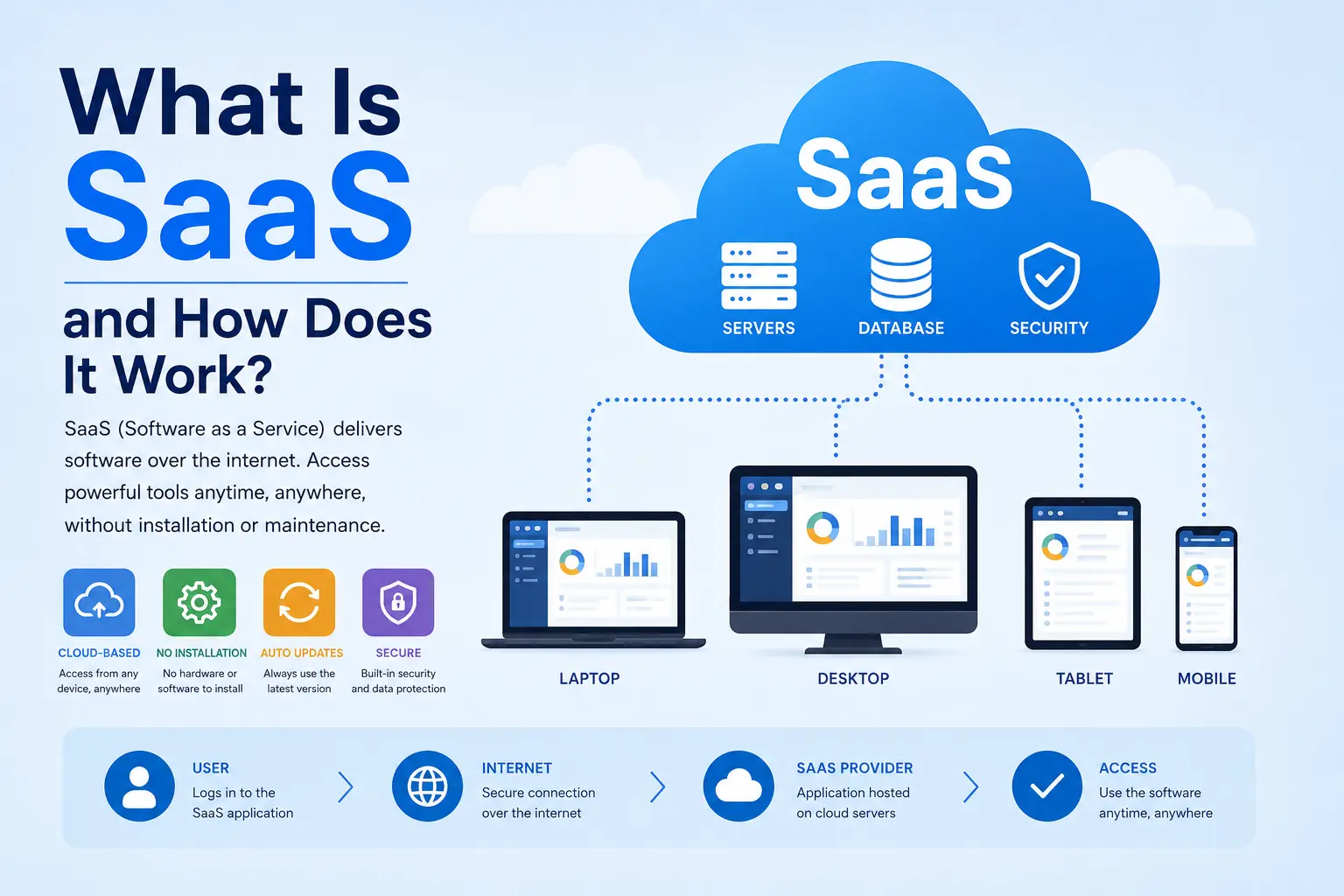
Software as a Service (SaaS) is a software delivery mode where the application is hosted by the software service provider and when used are accessed by the users of the software via the internet. SaaS applications are usually provided via a web browser or mobile app and can be accessed from various devices. SaaS apps are generally delivered via a web browser or a cell phone software and can be used throughout quite a few devices.
Most SaaS solutions are offered as a subscription-service. The software and features may be purchased on either a monthly or yearly basis. The provider’s responsibility is to host the application, run the infrastructure, apply updates and maintain the system.
This implies that users typically do not have to worry about updating software or hardware management. They can simply log in and use the software anytime and from a compatible device as long as they have internet connectivity!
How Does SaaS Work?
Clouds are the underlying technology powering SaaS applications. The program runs in the cloud on servers that the software as a service (SaaS) vendor maintains. These servers are accessed by the users via the internet every time a user logs onto it.
For instance, a business can utilize the web based accounting system. You can avoid installing accounting software on each employee’s computer, and the employees can log into the platform via their own account. The software company takes care of infrastructure, security, software updates and technical support in the background.
A multi-tenant architecture can be employed by many SaaS software solutions – a single piece of software can serve multiple customers, while each customer’s data lives inside its own segregated and secure environment. This way, software providers can help maintain and enhance the platform in the center while still offering the baseline platform to numerous users.
Why do Businesses Use SaaS?
The convenience is among the primary factors that makes SaaS the favored choice for businesses. There’s no need for organizations to invest in a big server, installation or complex computer system in order to start using a software platform.
Additionally, SaaS is flexible. Cloud-based applications can be accessed remotely by employees, across multiple devices, which is particularly beneficial for remote and hybrid teams. More users can be added to or the subscription upgraded as the businesses evolve.
One of the other major benefits is automatic maintenance. Generally, SaaS vendors are responsible for software upgrades, error patches and system enhancements. This saves time in the internal IT teams thereby allowing users to access and enjoy the newest version of the platform.
SaaS can help to make software accessible to smaller businesses, too. Businesses can find it easier to implement a subscription-based system than the hefty initial cost of enterprise software.
SaaS vs Traditional Software
Some software programs are typically mounted on a company’s server or computer. It may be part of the responsibility of the business to buy the licenses, keep track of them, make sure the hardware is in good shape and maintenance, and deal with technical problems.
When you pay a SaaS, an increasing number of these duties are tackled by the service provider. The software is used online and the supplier will be responsible for infrastructure and maintenance. This flexibility is attractive for many enterprises these days which are operating in the SaaS model.
But when it comes time for businesses to select a SaaS platform, there are factors beyond just internet access they must take into account, including data security, privacy, subscription fees, and more.
Conclusion
The new software delivery model of SaaS has changed the paradigm of delivery software to businesses and individuals. SaaS makes software more flexible, accessible and maintenance-friendly by providing it via the web.
Because of its subscription-based business model, cloud infrastructure, automated upgrades, and scalability, it is a favorite option for businesses of every size. With its continued growth and availability of business-ready applications, SaaS is expected to be a significant component of the future software landscape.
From communication to finance, customer management or creativity, tools can be accessible to any company through SaaS without all of the complexities of owning software.