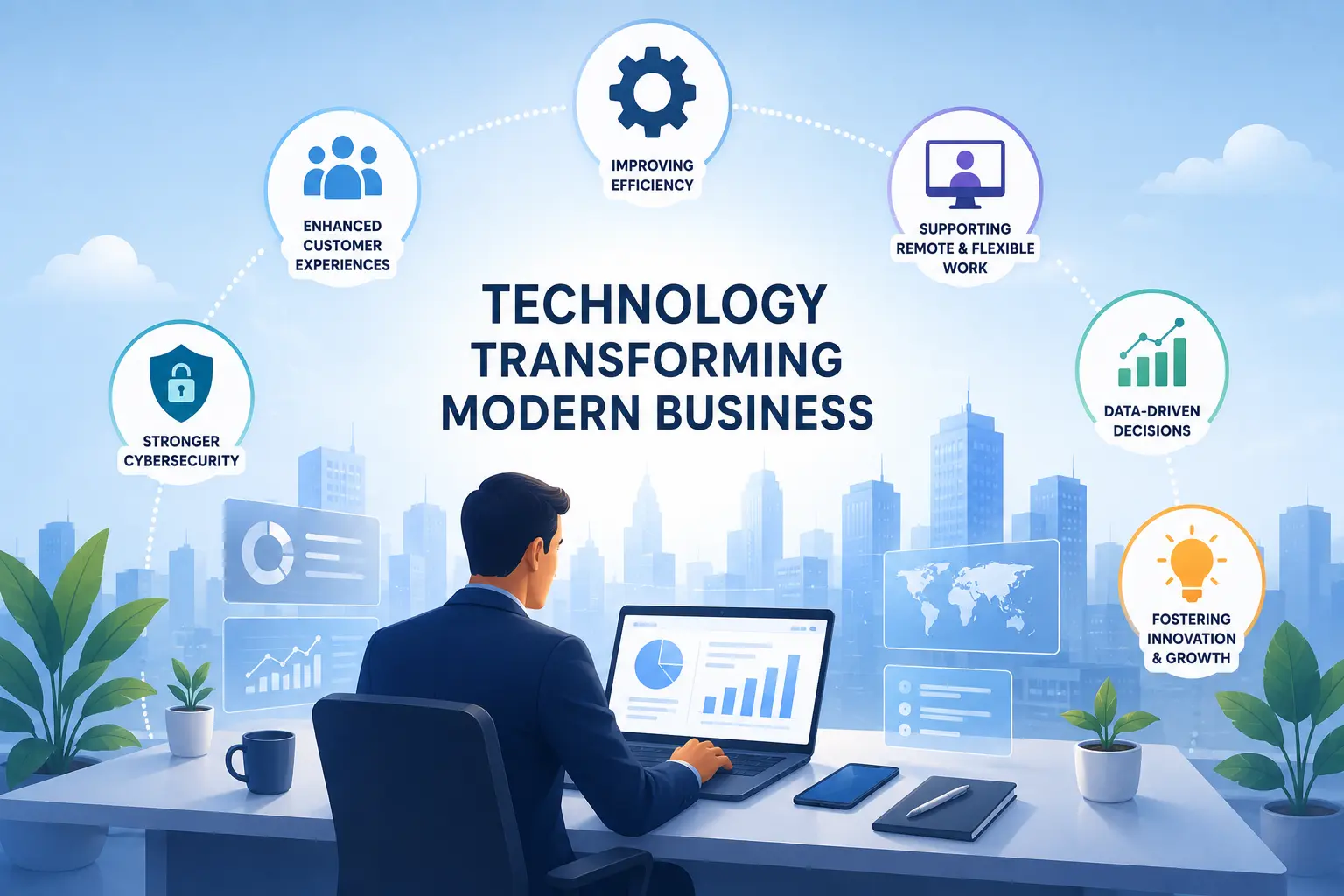
Technological advancement has grown to be one of the most relevant drivers determining the new business environment. Whether in a small startup or a large company with worldwide operations, tools of the digital world are being employed to enhance productivity, reach the customers, automate business processes, and help decision making. New technology may provide businesses with a competitive edge if they are able to adjust and adapt to change while others are not.
Technology has an impact on almost every facet of business. What the changing roles of sales, marketing, customer service, finance, operations, and human resources are becoming more connected is digital systems and cloud platforms.
Improving Business Efficiency
This is one of the most significant contributions that technology has made to contemporary businesses, increasing their efficiency. A number of repetitive activities that used to take hours of manual effort can now be automated. The software can be used by businesses to process information faster, maintain updated customer records, keep track of inventory, schedule tasks, and manage invoices.
The workforce has more time to engage in tasks that demand creativity, problem solving and strategic thinking, instead of repetitive administrative tasks, because of automation. This can have benefits not only on productivity but also lower the odds of human error.
Digital tools also enable businesses to bring different departments together. Integrated platforms allow organizations to share and deliver information updated from one central location without having to maintain multiple information silos.
Transforming Customer Experiences
Technology has drastically improved customer expectations. People expect communication, services and experiences that are now fast, convenient and tailored to their individual needs. The use of technology is an emerging venture and is fulfilling them in innovative ways for the businesses.
Customer Relationship Management (CRM) systems can be used to store information, track customer interactions and learn from the customer. You can also employ chatbots, mobile apps, online support systems and customized marketing to help communicate with your customers.
AI is also increasingly becoming an integral part of customer service. AI-driven mechanisms can address commonly asked queries, analyse customer behaviour and guide businesses to better products.
Supporting Remote and Flexible Work
Technology has reshaped the work-place, and what kind of work people do. Employees are able to collaborate across different locations using cloud-based software, video conferencing, project management and online communication platforms.
The internet has made it easy for employees to access critical information and applications, which is helpful to remote or hybrid workers. These teams can talk, collaborate, and oversee projects without having to stay in the exact same working environment.
This adaptability can help companies find workers from much further afield and offer workers more flexibility in their approaches to employment.
Making Data-Driven Decisions
Every day businesses create a lot of data. The technology assists organizations gather, get organized, and study this info.
Data analytics tools can provide insights into customer behaviour, sales performance, market trends, and operational efficiency. Business leaders aren’t, and shouldn’t be, making decisions based purely on the assumption or on what this is ‘obviously good for!Business leaders shouldn’t, and nor do they need to, make decisions based on just the assumption and/or intuition.
For instance, a business could examine their sales records to find out what their hottest commodities are or examine their customers to determine evolving consumer choices. These insights can assist organizations in crafting more effective strategies and business responses to shifts in the market.
A Gradual Increase in the Importance of Cybersecurity
With the increase in the dependency businesses place on technology, cyber security plays a key role in the businesses. Businesses may have customer details, financial information, employee information and business data stored digitally which is valuable.
Cybersecurity technologies secure organisations against data breaches, malware, phishing and other electronic dangers. Employers also need to educate workers on security protocols, including having strong passwords, being vigilant of suspicious emails, and taking care of information.
Nowadays, a powerful cybersecurity program is a vital element of business management.
Investigating and Fostering Innovation and Growth
Technology also brings new opportunities to businesses for innovation. Organisations have the opportunity to innovate their products, services, and business models through use of cloud computing, artificial intelligence, automation and other digital technologies.
Small businesses can access customers globally through digital platforms and startups can fight it out with bigger organizations with the help of technology. Businesses have been able to reach customers and grow more easily thanks to online marketplaces, digital payment and social media platforms.
Conclusion
This technology is impacting businesses in the modern day in several ways, including streamlining processes, enhancing customer journeys, facilitating remote working, data-driven changes and opportunities for innovation. But, tech is not just about buying new software and devices. It’s vital that business understands how digital tools can help their objectives and also fix actual business difficulties.
In an increasingly tech-driven world, being prepared for the future means being adaptable to and ready to harness technology. Applying technology wisely can enhance business operations, customer satisfaction, and enable new avenues for sustained growth.