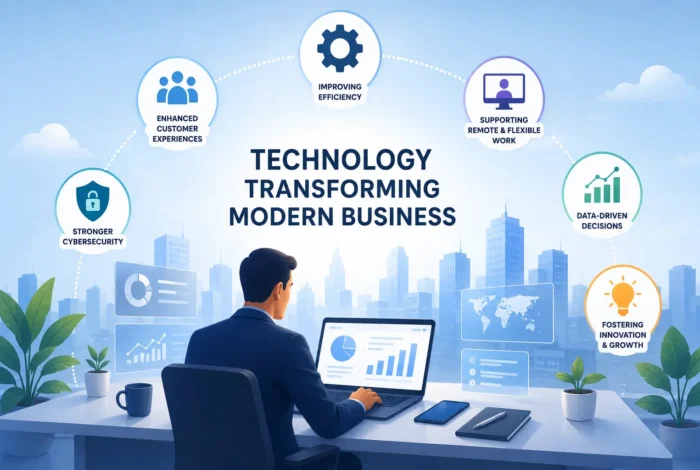

The technology is growing and changing business ways that enables businesses to communicate with customers as well as their daily activities. Businesses can benefit from ground breaking technology in 2026 that will offer improved productivity, automate repetitive tasks, deliver advanced security, and aid in decision making.
When it comes to technology, the small business can’t afford a large investment if you say so. Numerous new solutions are scalable, cloud-based and offered on a low cost subscription basis. Indeed, the most important thing is to have access to the right technologies that can solve real business issues, and provide tangible returns.
The following are some of the best business technologies that will be available in 2026.
Artificial Intelligence
Artificial Intelligence (AI) is one of the most crucial technologies for the contemporary business world. AI can help automate repetitive tasks, mine information, create content, help employees and enhance customer experience for businesses.
AI tools can be used across various industries in customer service, data analysis, administrative tasks, and marketing and sales. AI agents can also automate some parts of the workflow with minimal human effort and save costs for teams to focus on more value-added processes.
The primary benefit of AI for businesses is that it can boost productivity without demanding any additional effort – not a lot of extra employees either.
Cloud Computing
Cloud computing enables companies to gain access to software, data, and computing resources via the Web. Businesses can utilize scalable cloud services instead of only physical servers and local infra. Instead of just relying on physical servers and locales, companies can utilize scalable cloud services that have the ability to adapt to their necessities.
Cloud technology makes it easier to work collaboratively from a distance and is able to get employees to key business applications from anywhere. This can also aid companies in reducing hardware and maintenance costs, decrease prices, and scale their business.
Cloud computing will prove to be flexible for expanding enterprises that encounter adapting to meet changing business needs.
Business Automation
Employees can save time in a business with the use of automation technology. Today there are platforms available which can bind several apps together and create workflows without requiring any expertise in the domain.
After the primary form is submitted you can run tasks such as following up with email or updating data in a CRM system, process forms, trigger notifications, change data between applications and much much more.
By tackling repetitive tasks and automating them, businesses can reduce the chances of human error and monotony among employees, allowing for a more strategic approach to their responsibilities.

Customer Relationship Management
CRM’s value to the business that implements it is growing because they want to streamline their customer handling process: CRM can be used to organize customer data, track leads, manage sales pipelines, etc., and to track interaction with customers.
AI CRM software can provide additional capabilities and insights such as lead scoring, customer analytics, automated follow-up messages, and sales forecasting. These attributes can help sales and marketing complements to learn more about their customers and to speed up their ability to take advantage of sales opportunities even more.
Having an integrated CRM system helps organizations get a single view of their customers’ relations.
Cybersecurity Technology
With the increasing reliance on online platforms in the world of business, cybersecurity is becoming a growing concern. Businesses should ensure they make the necessary steps to protect their client data, money papers, staff information, and various other sensitive business information.
Multi-factor authentication, password management, endpoint protection, automated backups, security monitoring are some of the technologies that businesses should look into.
Investing in cyber security can help mitigate the risk of information being compromised and access being gained to the business and build trust with customers.
Data Analytics
The data analytics technology provides a way for business organizations to utilize huge quantities of data. These sales metrics, customers’ behaviour, internet guests to the site, marketing initiatives achievement, and much more can be tracked by data.
These AI analytics tools can identify trends and patterns that may be difficult to identify manually. This information can help the businesses in deciding the pricing, marketing strategy, having sufficient stock in the warehouses, and in the retention of the customers.
The availability of more data can lead to more strategic decision making and fewer assumptions.
Low Code Platforms
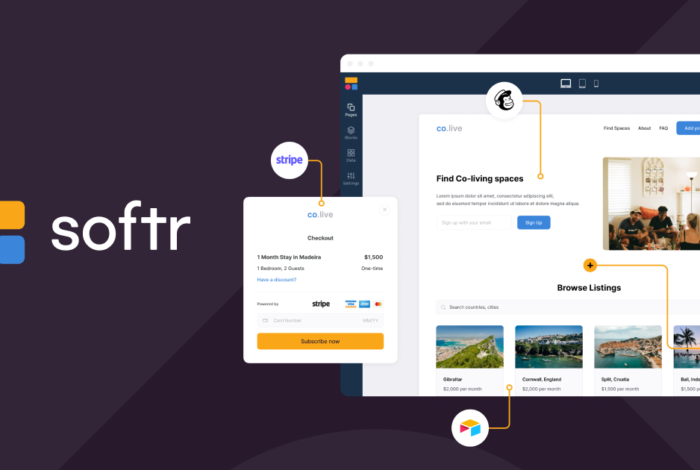
Both no code and low code platforms are gaining popularity, allowing technology to be available to companies that have fewer developers. These platforms enable the employees to develop apps, workflows, dashboards and automated processes without coding.
These solutions can be used in any small business and to solve or solve special problem/issue for the operations without investing in large amount of custom software development.
These platforms are continuously evolving, providing businesses the opportunity to leverage personalized digital solutions as well as reduce the penetration time and costs.
Final Thoughts
Business technologies don’t have to be the latest and most involved technologies to be best choices to use in the year 2026. Businesses ought to concentrate on technologies that tackle real problems, and help to yield concrete results.
Businesses are making the most of AI, cloud computing, automation, CRM systems, cybersecurity, data analytics, and no code tools to boost productivity, lower costs, improve customer relations, and grow their businesses.
There needs to be a phased approach that doesn’t implement all the new technologies at once – or one or two technologies chosen where they will have the best effect on the business. If firms monitor outcomes and until they achieve a successful payoff, step back a bit, they’ll be able to formulate a realistic technology plan and continue their search.