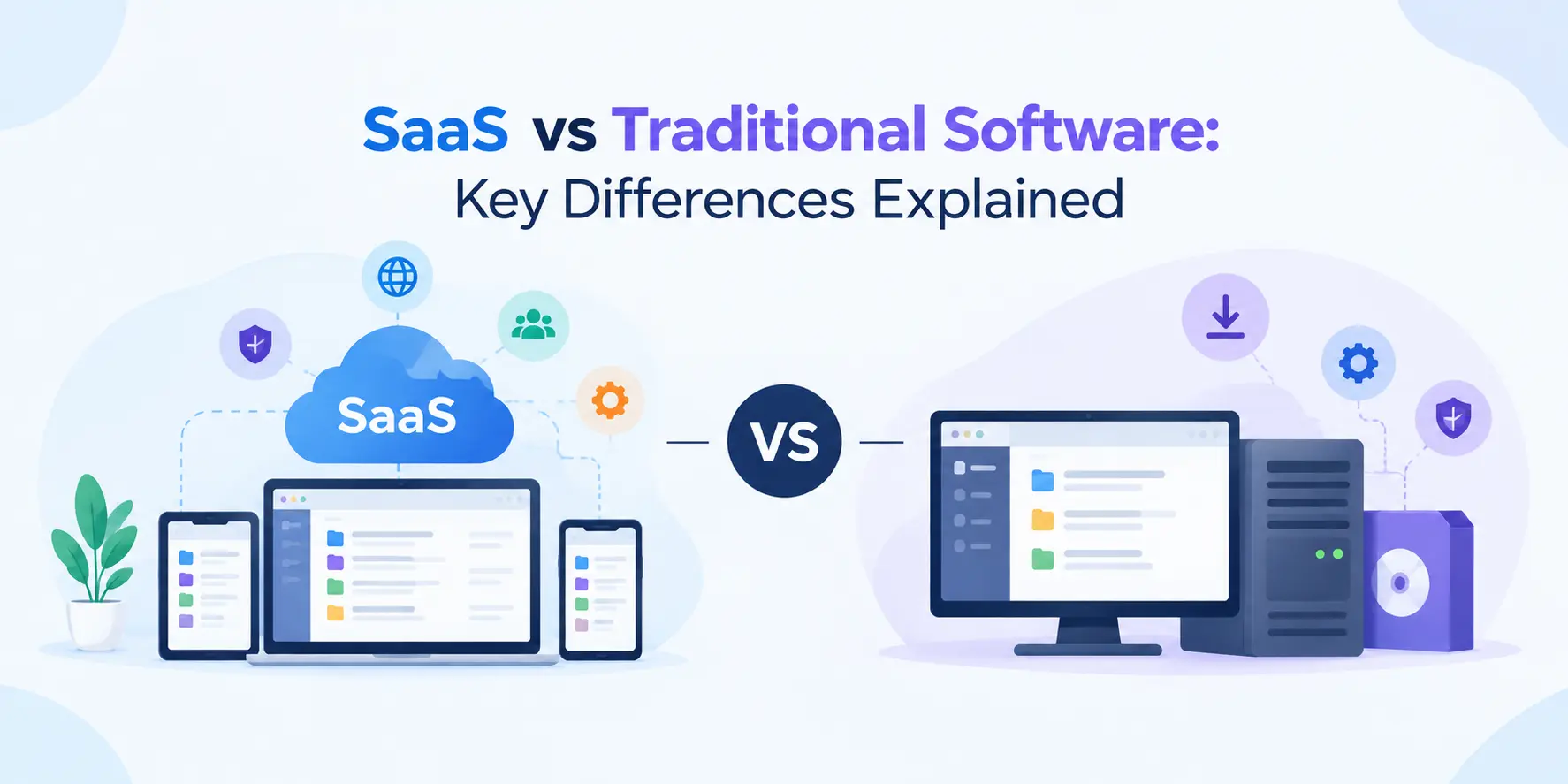
Businesses are choosing SaaS over traditional software for various reasons. SaaS software offers many advantages for businesses over traditional software.
In the modern day and age, software is the lifeline of a business, from communication to customer relationships, to accounting, marketing, at the most basic level of everyday business. The selection of the software, however, can be confusing. There are two types of common applications available, SaaS (Software as a Service) and traditional software.
Both can offer a comparable function, but they do not perform identical ways regarding payments, software delivery, maintenance, updates, and access. Being aware of these differences can guide businesses to a solution that meets their requirements and budget.
What Is SaaS?
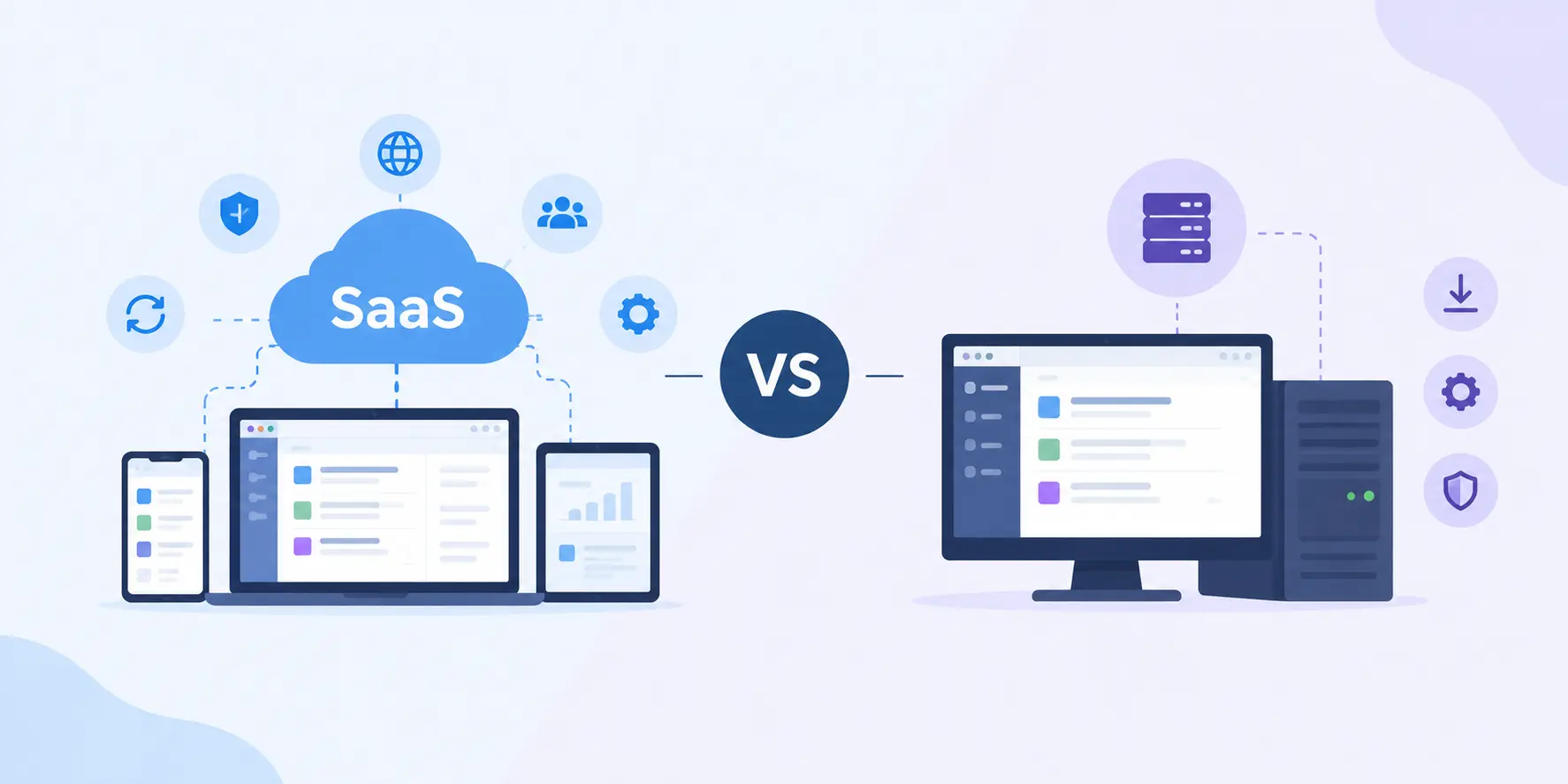
SaaS is the “cloud” based software delivery model. People don’t install software on their computer or company server, but instead log in using the internet, typically with a web browser or a mobile application.
The software vendor is responsible for application, infrastructure, updates and maintenance. Typically, customers pay as a monthly or yearly subscription. CRM, project, communication, accounting, and collaboration platforms are some of the popular ones.
With this model, companies can begin employing software without the commitment of purchasing and managing the hardware, or the challenges posed by complex installations.
Where’s All the Traditional Software?
Traditional software is typically used on individual computers or on a company’s servers. Businesses normally rent a software license and will be accountable for installing, configuring, supporting and updating software.
With an on-premises installation, they may need to also maintain the servers, storage, security, backups, and other infrastructure. This enables companies to have more control over their environment, but it can also need more technical resources.
SaaS vs Traditional Software: Deployment
The two big differences are deployment and features.
SaaS applications are software applications that are hosted by the SaaS provider and accessed via a web browser. Users typically can use the software without requiring to install it on all computers, once an account is made and a subscription has been activated.
Typical software necessitates installation on particular hardware or company controlled servers. IT support and configuration may be required as well as preparatory work of the hardware depending on software.
Cost and Pricing
Usually, SaaS is priced in a subscription manner. Recurring monthly/annual fee depending on users, features and/or usage/service plan.
Traditional software has been much more dependent on up-front licensing fees over the years. Other costs for hardware, maintenance, hardware upgrades and IT support are also to be considered.
But not all the time is SaaS’s cost more affordable. Retailers need to think in terms of long-term expenses, rather than just short-term expenses.
Updates and Maintenance
One of the advantages of SaaS is that the provider takes care of software updates, patches, and infrastructure maintenance. Upon release, the users are usually provided with new features and security updates without needing to download all those individually.
Organizations may need to deal with software updates manually with traditional software. This can be an extra time and maintenance burden for small companies that don’t have plenty of IT resources.
Available and remote employment opportunities.Job availability and remote jobs.
SaaS is built with access to the internet in mind, and it is convenient for teams to use, regardless of where they are located. Depending on the service, the same application can be used on the laptop, desktop, tablet or smartphone by employees.
Traditional software might rely more heavily on the device or network that it’s running on. Certain traditional applications can be accessed remotely, but this could involve extra configuration or infrastructure.
Scalability
Scaling software usage as a growing enterprise can be easier with SaaS implemented. Businesses often can add users, expand storage, switch subscription plans and use the same servers.
As the organization grows, it may need to purchase extra licenses, hardware, or infrastructure for traditional software. When an organization grows, additional licenses, hardware, or infrastructure may be necessary for traditional software. This makes the scaling more complicated, especially for larger deployments.
Which of the Two is Suitable For Your Business?
Companies interested in speedy deployment, remote access, automatic updates, and flexible subscription models may find SaaS to be a manageable option. It can also minimize the number of infrastructure a company requires to provide service.
While traditional software might be more appropriate when an organization requires more control over its software environment, its infrastructure, or deployment. Some companies also may have special regulatory, security, integration or customization considerations that will impact their selection.
Final Thoughts
There are a few key distinctions between SaaS and traditional software, and they revolve around delivery, management, access and payment. Traditional software usually provides organizations with greater control over the software environment, as SaaS moves the ownership of a lot of the actual infrastructure and maintenance to the provider.
Both models are not applicable for all business. When deciding on which to choose, take into account factors like cost, scalability, security needs, accessibility, customization, maintenance, and requirements for your business. Knowing these differences can help you choose software applicable to your organisation’s objectives.