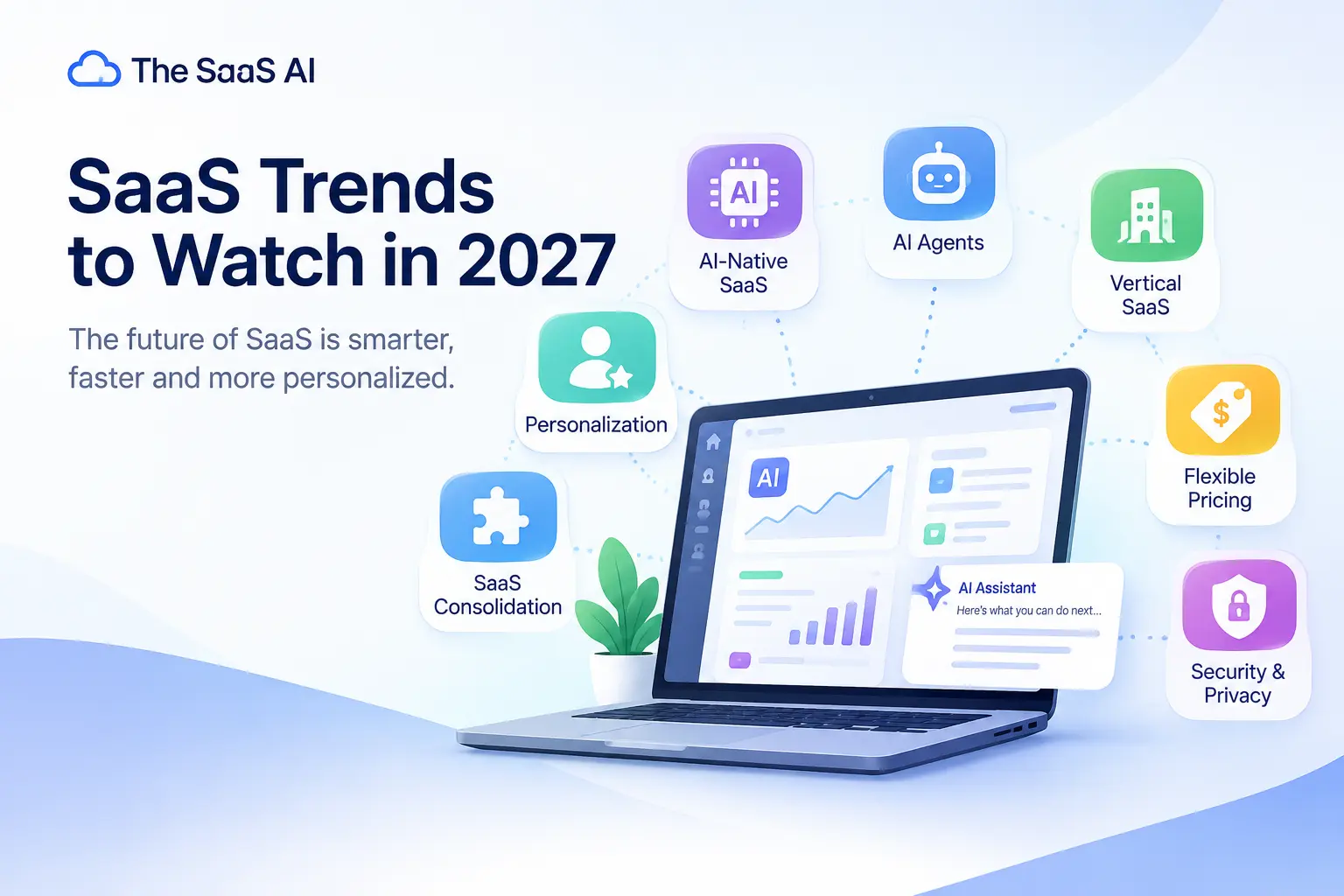
The SaaS industry is entering a new phase. Software is no longer just moving from desktop applications to the cloud. Artificial intelligence, automation, cybersecurity, and increasingly personalized user experiences are changing how SaaS products are built, sold, and used.
As businesses look for ways to reduce costs while doing more with fewer resources, SaaS providers will need to deliver more value than ever. Here are the key SaaS trends to watch in 2027.
1. AI-Native SaaS Will Become the Standard
AI is quickly moving beyond being an additional feature inside SaaS products. In 2027, more software platforms will be designed around AI from the ground up.
Instead of simply offering AI-generated suggestions, SaaS applications will increasingly use AI to analyze data, make recommendations, automate repetitive work, and complete tasks.
For example, CRM software could automatically identify promising leads, generate follow-up messages, update customer records, and suggest the next sales action.
The result will be SaaS products that require less manual input and deliver more value automatically.
2. AI Agents Will Transform SaaS Workflows
AI agents are expected to become one of the biggest SaaS trends in 2027.
Unlike traditional AI assistants that primarily respond to prompts, AI agents can perform multi-step tasks based on a goal. This could include researching prospects, preparing reports, managing support tickets, or coordinating workflows across multiple applications.
SaaS companies will increasingly integrate agents into their platforms, allowing users to delegate entire processes rather than individual tasks.
3. Vertical SaaS Will Continue to Grow
One-size-fits-all software is becoming less attractive to businesses with specialized requirements.
Vertical SaaS focuses on specific industries such as healthcare, real estate, education, construction, legal services, and hospitality.
These platforms can offer industry-specific workflows, terminology, compliance features, and integrations. As businesses demand software that better matches their operations, vertical SaaS is likely to see continued growth in 2027.
4. Usage-Based and Flexible Pricing Will Expand
Traditional SaaS pricing often revolves around monthly subscriptions and fixed user tiers. However, businesses increasingly want pricing that reflects how much software they actually use.
Usage-based pricing, hybrid subscriptions, and flexible plans are likely to become more common.
This model can be particularly attractive for startups and growing businesses because they can scale their software costs alongside their usage.
5. SaaS Consolidation Will Become More Important
Businesses are dealing with an increasingly large number of SaaS applications. Managing dozens of tools can create higher costs, security risks, duplicate functionality, and complicated workflows.
In 2027, companies will increasingly look for platforms that combine multiple capabilities in one place.
SaaS vendors that provide strong integrations, centralized data, and broader functionality may have an advantage over standalone tools.
6. Security and Privacy Will Become Competitive Advantages
As SaaS platforms handle more sensitive business information and AI systems process increasing amounts of data, security will become a major purchasing factor.
Customers will expect stronger authentication, encryption, access controls, compliance features, and transparent data policies.
Security will no longer be something SaaS companies can treat as an afterthought. For many businesses, it will be a deciding factor when selecting software.
7. Personalization Will Drive Better User Experiences
AI will also make SaaS applications more personalized.
Instead of every user seeing the same interface and recommendations, software will increasingly adapt to individual roles, behaviors, preferences, and business needs.
Personalized dashboards, automated recommendations, intelligent onboarding, and context-aware workflows could become standard features across SaaS platforms.
The Future of SaaS
The SaaS market in 2027 will likely be defined by AI, automation, specialization, flexibility, and security. Businesses won’t simply look for software that provides features; they’ll look for platforms that actively help them achieve outcomes.
For SaaS companies, this creates both opportunities and challenges. Products that successfully combine intelligent automation with a simple user experience will be better positioned to compete in an increasingly crowded market.
The biggest SaaS trend of 2027 may ultimately be a shift from software that helps people work to software that works alongside them.